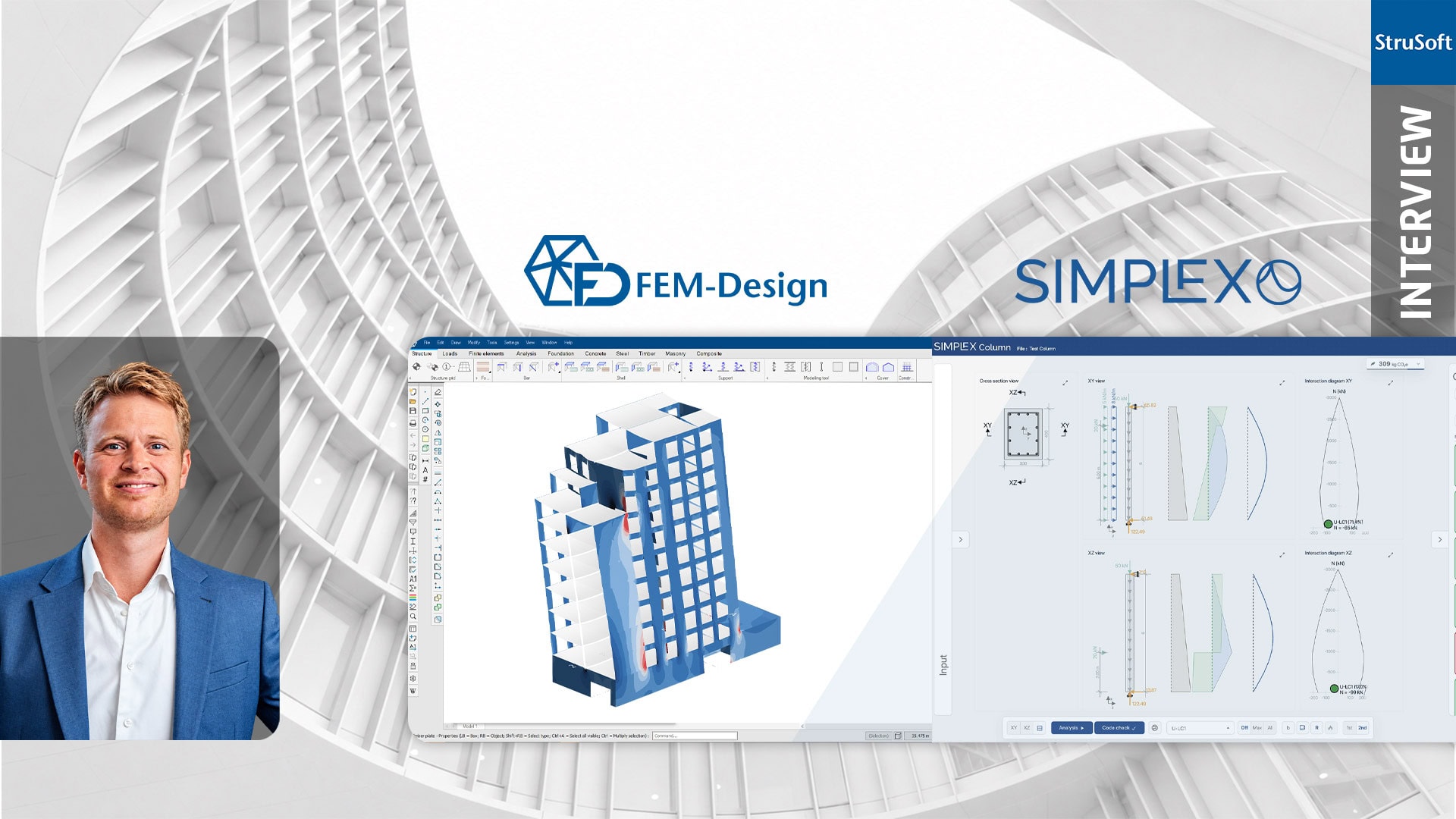
In this interview, Dennis Kristensen, Managing Director at Matrix/StruSoft Structural, shares the thinking behind recent developments across the Simplex Suite and FEM-Design, how the company is approaching AI, automation, and more connected structural engineering workflows. StruSoft’s focus is simple and clear: helping structural engineers work more efficiently while maintaining confidence in their calculations and decisions.
Simplex Suite and the need for simpler everyday design
Q: Simplex Suite is becoming an important part of StruSoft’s product direction. What is the vision behind it?
Dennis Kristensen: The vision behind Simplex Suite is to make everyday structural design easier, clearer, and more connected. Many engineers still rely on a mix of desktop tools, spreadsheets, local files, and separate calculation routines. That can work, but it often creates friction. Time is spent checking versions, transferring information, producing separate reports, or repeating manual steps that should be simpler. Simplex Suite is our answer to that challenge. It brings practical 2D structural design tasks together in a more modern environment, with a focus on usability, reliable calculations, and professional documentation.
The Simplex Suite is much more than “just” individual applications. It is also the portal that connects the structural engineering project. Full overview of all structural elements in your project. Full overview, share projects, communicate, revise.
The suite is focused on everyday structural engineering tasks such as beams, foundations, columns, and frames and geotech. These are common calculations, but they still require accuracy, transparency, and proper documentation. Our aim is not to make engineering less rigorous. It is to remove unnecessary complexity around the process so engineers can spend more time on structural decisions and less time on administration or fixing errors.
Q: How does Simplex fit into StruSoft’s broader product strategy?
Dennis Kristensen: StruSoft has always had a strong focus on engineering quality and support. With Simplex, we are combining that experience with modern cloud infrastructure. The calculation engines are built on proven engineering knowledge, while the user experience is designed for a more modern way of working. Engineers should be able to start quickly, understand the results clearly, and produce professional documentation without a complicated setup.
This is also important for the transition from older tools. Many users have long experience with solutions such as WIN-Statik, Dimension, JIGI, and Matrix Geo. We respect that history, but we want to gather all our knowledge and deliver a superior product. Simplex is not just a replacement in name. It is a way to bring familiar calculation needs into a platform that is easier to maintain, easier to access, and better prepared for future standards and AI integrations.
Q: What can users expect next from Simplex Suite?
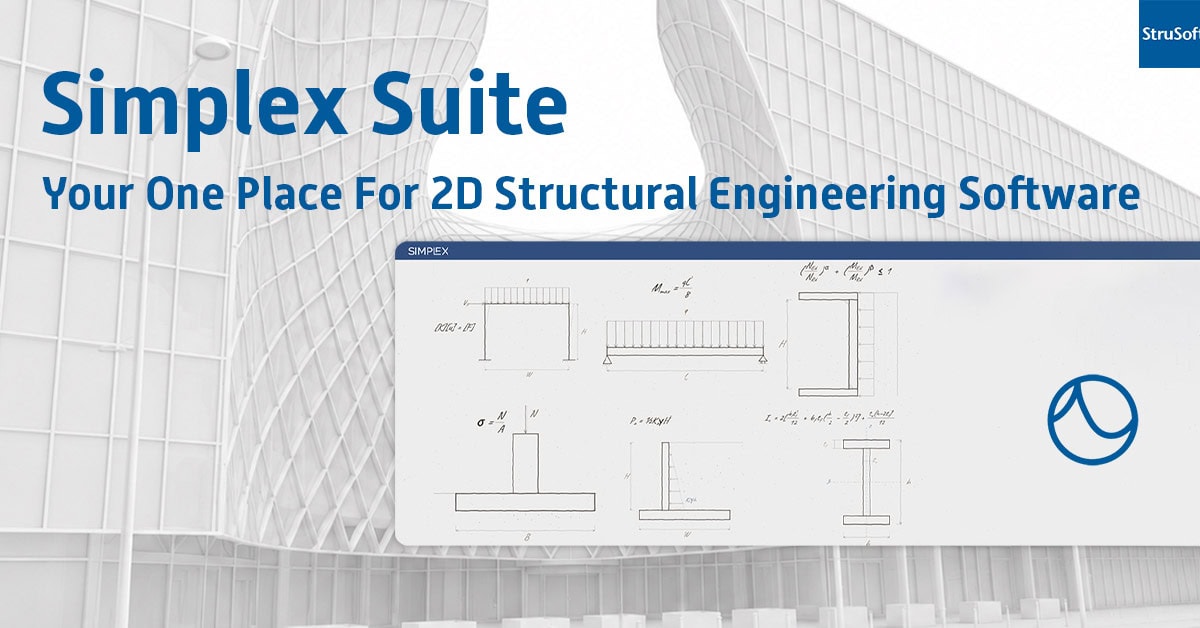
Dennis Kristensen: We have a strong development pipeline for the autumn period. After focusing heavily on the latest Eurocode updates across the Simplex apps, we are now adding new functionality that supports smoother workflows. This includes the release of Simplex Column, an updated Simplex Center, file sharing, MultiPrint, new reports for beams and foundations, and the Simplex Frame beta.
For engineers, the practical value is that more everyday design tasks can be handled in one connected environment. File sharing helps collaboration. MultiPrint helps documentation. New reports improve transparency. Simplex Column and Simplex Frame expand the scope of the platform. Over time, we want Simplex to become a natural home for practical 2D design work, with tools that feel efficient but still provide the clarity engineers need for checking, approval, and communication.
FEM-Design 25, 7DOF, and more realistic structural behaviour
Q: FEM-Design 25 introduced several important improvements. What stands out most from your perspective?
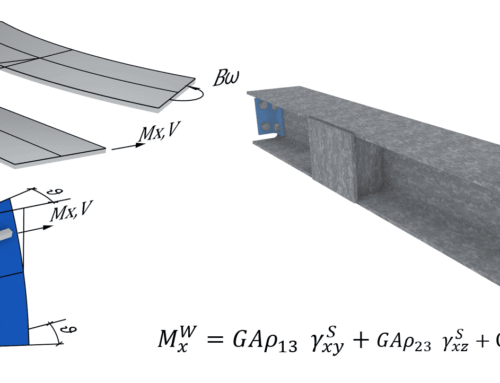
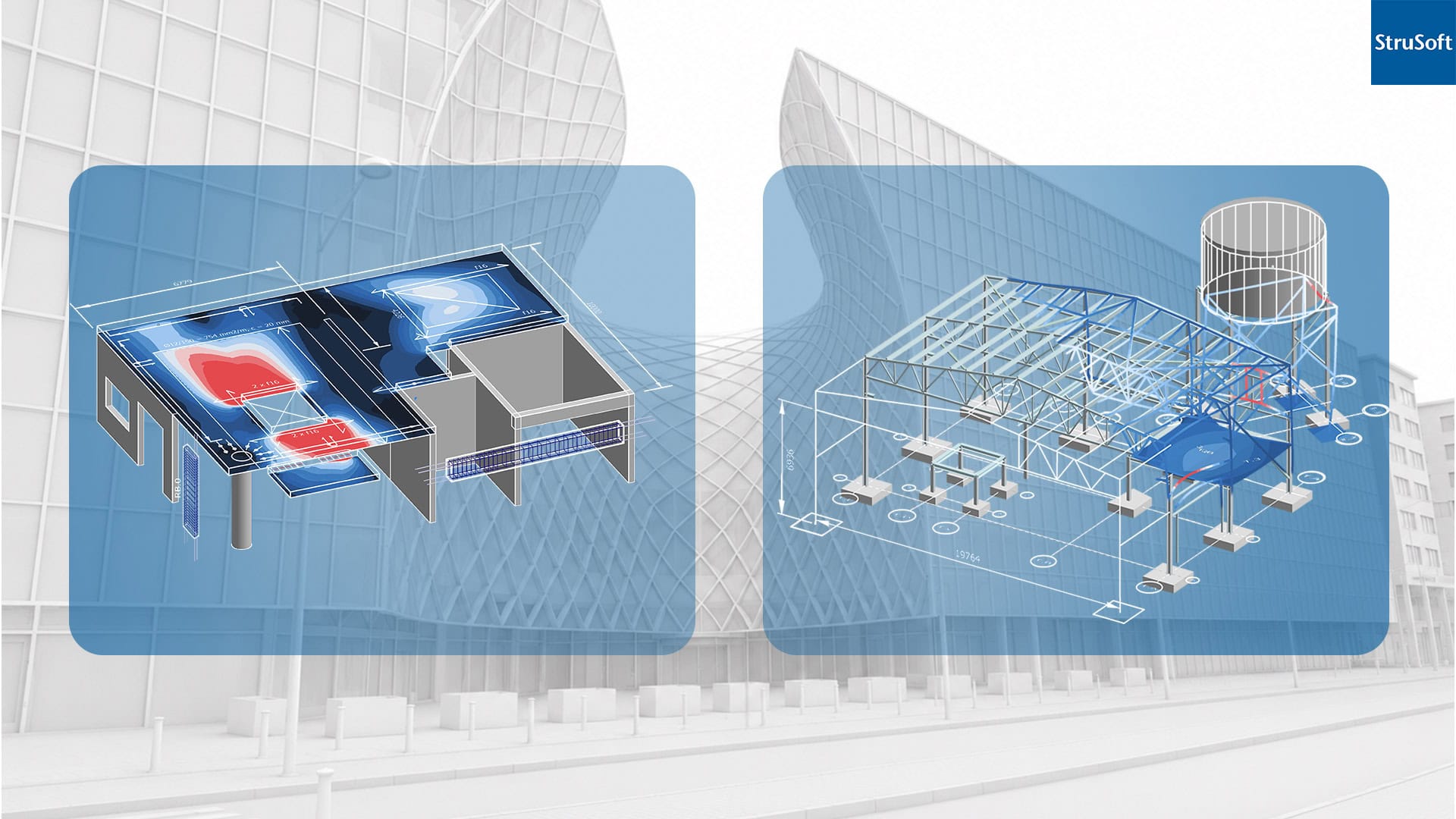
Dennis Kristensen: FEM-Design 25 was an important release because it combined technical innovation with everyday workflow improvements. The introduction of the General 7DOF warping bar is a clear example. It helps engineers capture torsional warping behaviour and stability effects more realistically without needing to move immediately to complex shell or solid modelling. That matters because engineers need models that are accurate enough for the problem but still efficient enough for real project work.
There were also major improvements to BIM and interoperability, including support for IFC 4.3 and better workflows for importing, merging, and coordinating model information. In addition, performance improvements in reinforced concrete shell design and daily usability updates make a difference for users working with larger and more complex models. A good release is not only about one big feature. It is about improving the full engineering process.
Q: The 7DOF bar model received special attention. Why is it important for engineers?
Dennis Kristensen: Torsional warping is not a theoretical detail that only matters in rare cases. Real beams do not always behave like simplified six-degree-of-freedom models, especially when torsion and restrained warping are relevant. With 7DOF, engineers can capture these effects in a more realistic way. This is particularly valuable for steel beams and columns, stability analysis, and structures where torsional behavior influences the result. Also, Eurocode G2 has put more focus on this.
The benefit is not only more advanced analysis. It is also better engineering judgement. When the model represents behaviour more realistically, the engineer can make better decisions about safety, efficiency, and detailing. At the same time, we want the workflow to remain practical. The goal is to give engineers access to more realistic analysis methods without making the modelling process unnecessarily difficult.
Support, user feedback, and practical improvement
Q: Recent support feedback has been positive. How do you view support as part of StruSoft’s product promise?
Dennis Kristensen: Support is a core part of our value to engineers, and I hope that all users feel this when contacting us. Structural design software is used for serious decisions, and even experienced users need fast, knowledgeable help from people who understand engineering. Positive survey feedback is encouraging, especially when users say they are satisfied with the support they receive. But we should not treat that as a reason to relax. Good support also gives us insight into where workflows can be clearer, where documentation can improve, and where product development should focus next.
There is always room for improvement. Sometimes that is about strategy, sometimes execution, and sometimes feature delivery. The key is to listen carefully and then turn feedback into practical changes. Engineers do not need vague promises. They need improvements that reduce time, increase confidence, and make project work smoother.
AI, automation, and engineering responsibility
Q: AI is becoming more visible in engineering workflows. How should structural engineers think about it?
Dennis Kristensen: AI can already help with structured information, repetitive tasks, reporting, summaries, and working with data. We have seen examples where AI can process finite element model information, generate useful explanations, and support documentation. That is interesting because open data workflows have always been important in FEM-Design. If information is accessible and structured, new forms of automation become possible.
At the same time, we need to be responsible. AI does not replace engineering judgement. It can help analyse information, identify patterns, and speed up certain tasks, but the engineer remains essential for understanding load paths, structural behaviour, assumptions, verification, and compliance. Our approach is to encourage innovation while being clear about limitations. We want our people and our users to become more capable with AI, not less critical.
For StruSoft, responsible AI adoption means testing carefully, using engineering knowledge as the foundation, and focusing on use cases that genuinely help users. Automation should improve quality and efficiency, not create a black box. In structural engineering, transparency is essential. Engineers must be able to understand why a result was produced and whether it is appropriate for the project.
Priorities for 2027
Q: Looking ahead, what are StruSoft’s main priorities for 2027?
Dennis Kristensen: Our priorities are closely connected. First, we want to continue expanding Simplex Suite, so it becomes an even stronger platform for everyday structural design. Second, we want to continue the development of FEM-Design as a leading tool for advanced analysis, design, BIM workflows, and open data exchange. Third, we want to support the integration and cooperation between Matrix Software and StruSoft where it brings clear value to users.
The upcoming second generation of Eurocodes is also a major focus. Standards are changing, and engineers need software partners who prepare early, explain the changes clearly, and help them adapt with confidence. That is not only a technical implementation task. It is also an education and communication task.
Ultimately, our direction is to make more connected structural engineering workflows, with focus on transparency and more efficiency. Whether someone is using Simplex for a fast 2D calculation or FEM-Design for a complex 3D model, the same principle applies: the software should simplify the process, make engineers achieve more, and support better decision making. That is where we will continue to invest.
If you want to learn more about FEM-Design and try it in your projects, you can start with the free trial here.
If you’re interested in 2D structural engineering software, then the Simplex Suite can be your friend.